

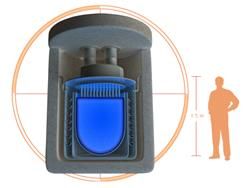
Smaller reactors are currently being developed and promoted as a new option for electricity generation using nuclear energy. There are many benefits, as well as drawbacks, to using small modular reactors (SMRs). The new generation of reactors will cut the size of standard reactors and offer flexibility in power production and shorter construction times.
Many of the SMRs will generate fewer than 350 megawatts. In comparison, the average U.S. nuclear reactor in operation today generates roughly 1,000 megawatts, nearly enough power to generate a city the size of Charlotte, NC.
While building large-scale nuclear plants is still a part of our energy future, small modular nuclear reactors could lend well to these projects by enlarging the level of deployment and application of nuclear energy. These new breed of reactors can be installed module by module, all the while offering businesses a broader array of energy options.
Review the video below which features a Q&A on SMRs with Paul Genoa, the senior director of policy development at the Nuclear Energy Institute:
Small, modular nuclear power plants are an important addition to America’s energy mix, helping to keep the air clean and enhance energy security. Small reactors can replace fossil-fired facilities, provide process heat for diverse industrial applications and generate electricity for remote locations. Modules can be added as needed—built in controlled factory settings and easily transported to the site, where they will operate without refueling for anywhere from two to 10 years, depending on the design. Together with large reactors, they comprise a full product line of clean, safe, secure carbon-free energy sources. -NEI.org
Check out the NEI's small, modular reactor webpage for more information.