

The Truth Behind the Top 5 Popular Misconceptions About Nuclear Energy
The complexity of generating electricity through nuclear energy leaves the science open to many common misconceptions. Nuclear energy can be very difficult to explain and is often misinterpreted in popular TV shows, movies and books. The following list aims to dispel the main misconceptions of nuclear energy.
Misconception No. 1: Nuclear Used Fuel is Green Goo in a Test Tube
One popular misconception surrounds the fuel. After the popular TV show, “The Simpsons,” many people imagine the fuel in nuclear power plants looks like this:

In reality, nuclear fuel is solid in a pellet form and looks like this:

As mentioned in a previous post, uranium is the most common form used in a nuclear reactor. The uranium is mined, enriched and turned into small pellets, which are stacked end-to-end in fuel rods. Fuel rods are bundled together and form a 13-foot fuel assembly. Currently, in U.S. reactors the fuel stays in this form indefinitely. To read more about the fuel cycle, don’t miss the NIC’s three-part series on nuclear fuel. While the fuel in nuclear reactors does not have a “Simpsonian” green glow, it will glow with a light blue light under the right circumstances.
Misconception No. 2: The Nuclear Industry Generates Hundreds of Football Fields Worth of Used Fuel
Another popular misconception around nuclear fuel is nuclear energy produces an immense amount of waste. Used nuclear fuel is stored in two forms: In large, robust, concrete containers and concrete and steel-lined storage pools. According to the Nuclear Energy Institute (NEI), “All the used nuclear fuel produced by the U.S. nuclear energy industry in 50 years of operation—approximately 62,500 metric tons—would, if stacked end to end, only cover an area the size of a football field to a depth of about seven yards.”
Misconception No. 3: Those Who Live Around Nuclear Power Plants are Exposed to More Radiation than Those Who Don’t
People are exposed to small amounts of radiation every day from natural and man-made sources. Exposure occurs when radiation penetrates the body. For example, when a person has an X-ray, that person is exposed to radiation. We receive most of our radiological dose from the sun, earth and medical treatments. Radiological dose, which is how much radiation someone has received, is measured in mrem. The average person who lives in a brick house, receives 10 mrem of radiation in a year. In comparison, if you live every day at the perimeter of a nuclear power plant for an entire year, you will only receive one mrem of radiation. Click here to see other ways radiation fits into our daily lives.
Misconception No. 4: Nuclear Power Plants Can Cause a Nuclear Explosion
The makeup and the enrichment of the uranium in nuclear reactors is very different from that of a nuclear warhead. The NEI explains why a nuclear power plant cannot explode like a nuclear bomb:
The concentration of uranium-235 within the reactor fuel is far too low to be explosive and all U.S. commercial reactors are self-limiting. During power operations, when the temperature within the reactor reaches a predetermined level, the fission process is naturally suppressed so the power level cannot spike under any circumstances. No one could intentionally or unintentionally alter a commercial nuclear reactor, its controls or its fuel to make it explode like a nuclear bomb.
Misconception No. 5: Wind and Solar Power Can Replace Nuclear
In order to meet future energy demands, electric utilities will have to depend on a wide array of energy sources, which include wind power, solar energy, biomass, natural gas, nuclear energy and several other sources. In light of this, Duke Energy believes strongly in a diverse energy mix and has invested billions of dollars to diversify its generation fleet. The company has invested close to $2 billion on wind and solar energy, buying Duke Energy more than 1,000 megawatts of wind capacity and 30 megawatts of solar.
While wind and solar power have a definite place within Duke's fleet, neither technology has advanced enough to replace nuclear power plants. Wind and solar cannot provide baseload demand (the minimum amount of electricity required to meet minimum energy demands) because neither technology yields enough power or offers a constant supply of electricity. The following graphic illustrates how much wind and solar we would need to match annual nuclear energy production:
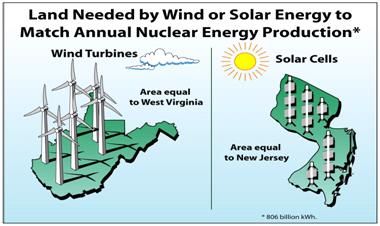
While wind and solar continue to develop, they are not currently able to meet the demands met by nuclear power plants.
Further Reading: